
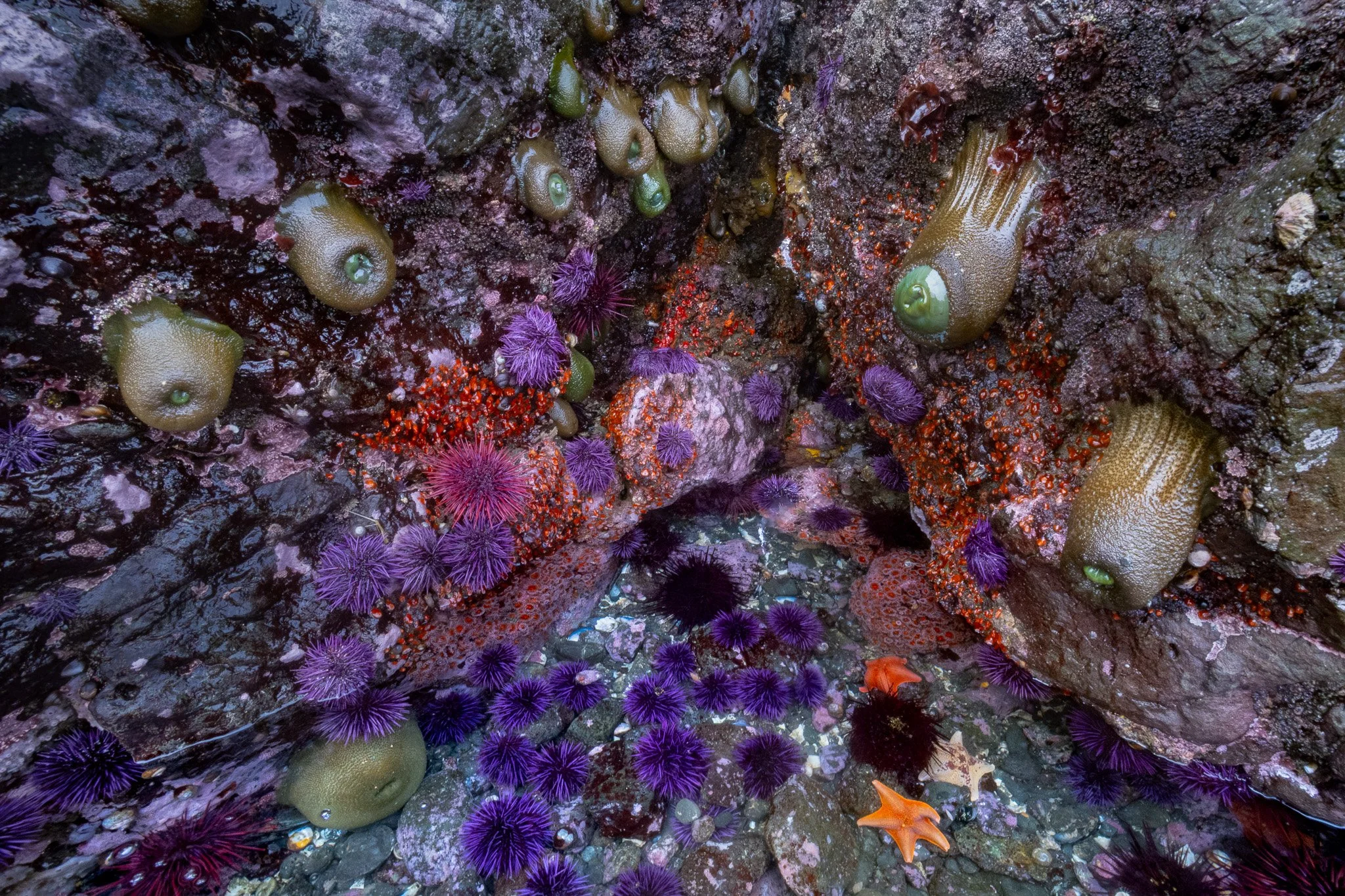
Documenting the California Intertidal
This project started four years ago, during my first time tide pooling in 2022. At the time, I had recently moved from landlocked Colorado to California. I was instantly hooked: the intertidal zone held greater biodiversity than any other ecosystem I had explored. That night, I saw multiple species of sea slugs, but the most memorable was a clown dorid (Triopha catalinae). I learned later that this species is common in the area, but at the time, it was one of the most alien-looking organisms I had ever seen.
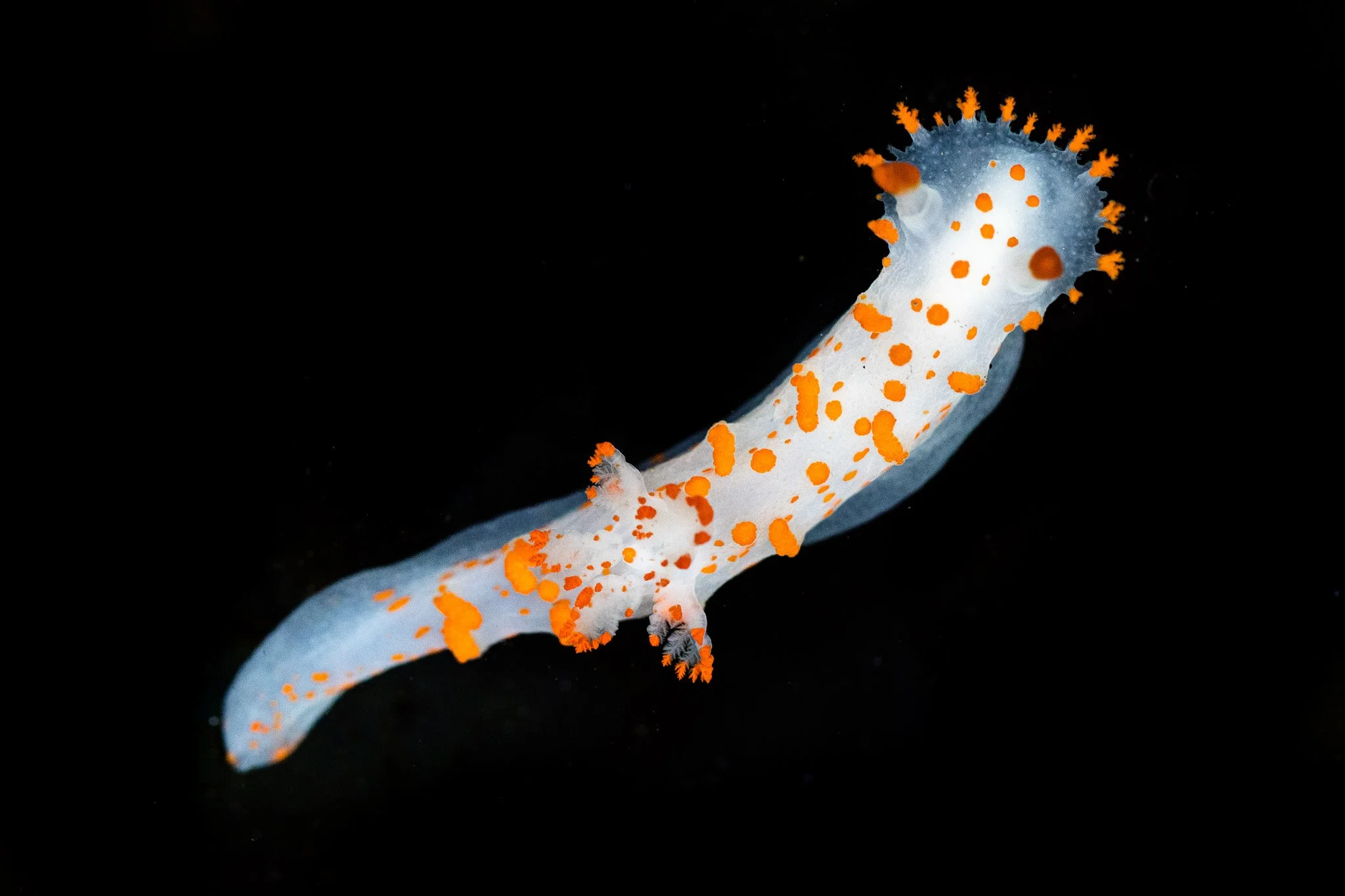
This was the first nudibranch I ever photographed. The sun was setting, and the slug sat upon a dark piece of seaweed. When I raised my camera to my eye, I saw a starry scene: the low light and dark backdrop created a black background that highlighted my subject and the particles in the water. It was an impactful way to show off how unique these animals are.
Since then, I have created a DIY field studio setup and taken hundreds of black-background photos of nudibranchs, crustaceans, fish, and countless other intertidal animals. This project has taken me from San Diego to Crescent City on countless adventures that have taught me about marine taxonomy, ecology, biodiversity loss, wildlife photography and public outreach.
The biggest problem seen in any form of biological studies is that we are losing biodiversity at an alarming rate. This is especially true for intertidal communities, many of which face threats from warming waters, development, runoff, and invasive species. Through talking to locals, I also noticed that many people don’t realize how much biodiversity lies just below the surface and can be seen and enjoyed while staying (mostly) dry on land. By documenting intertidal biodiversity and posting images on social media and my website, I have raised awareness of countless marine invertebrates that might otherwise go unnoticed. The most direct examples of this can be seen through my social media posts.
To share my project documenting intertidal biodiversity in California, I've found that short-form video content is the most effective way to engage large audiences. The best-performing content usually involves showing the audience something they have never seen or noticed before. Getting people familiar with these overlooked organisms will hopefully make them think twice about their own local ecosystems and slow down and take a closer look. This general public awareness is key to any conservation initiative that protects biodiversity
In addition to raising public awareness, this project has helped me detect unusual patterns in species distribution that shift entire ecosystems. The documentary-style photography I complete creates data indicating the presence of which species are present and when. This has helped me reveal changes in seasonality and climate that haven’t been thoroughly documented. For example, the 2026 El Niño has pushed southern-occurring marine invertebrates much farther north. I was among the first to see a few particular patterns triggered by this climate phenomenon, exacerbated by global warming.

Hopkins' Rose (Ceratodoris rosacea)
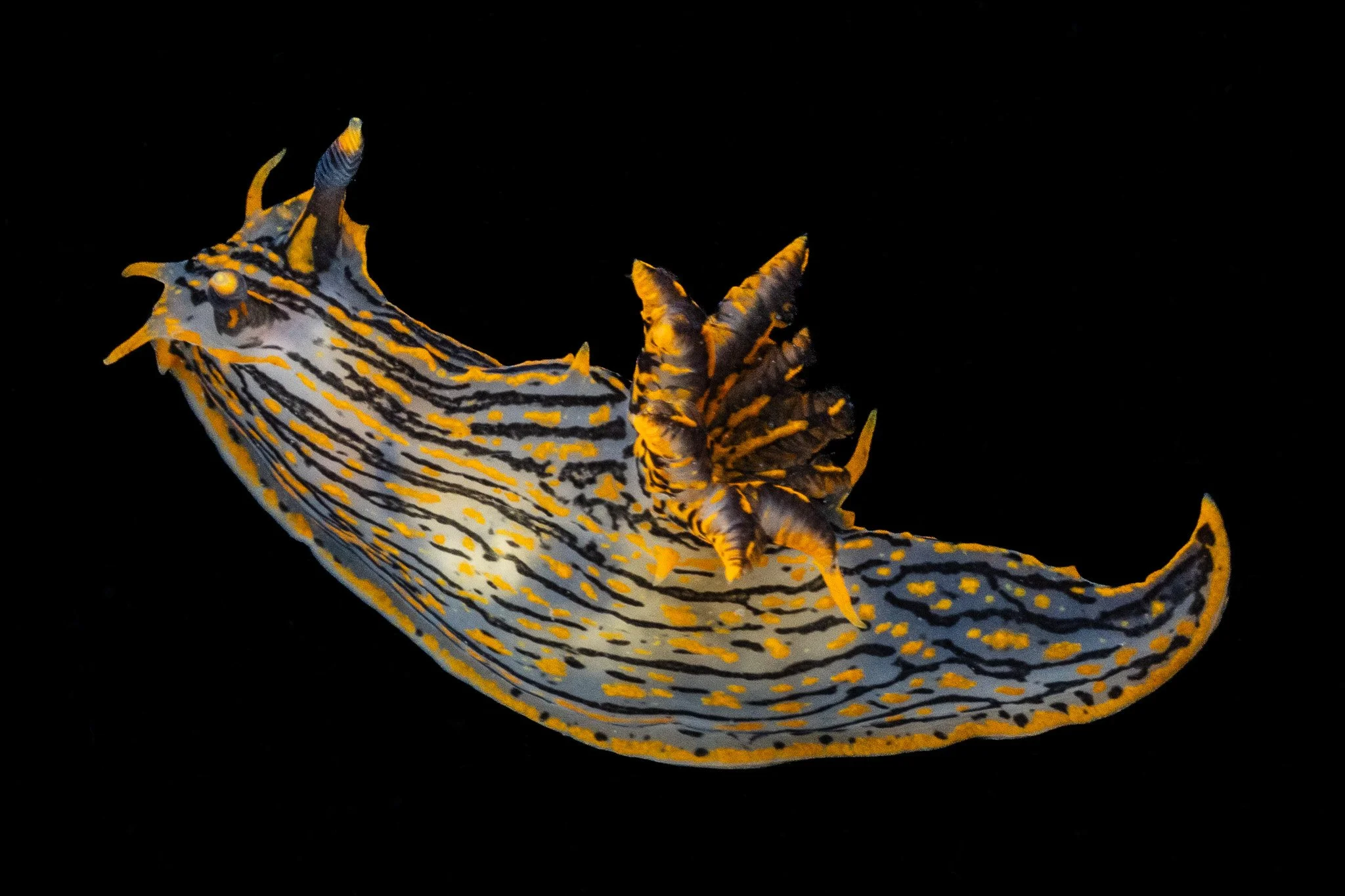
Sorcerer's Dorid (Polycera atra)
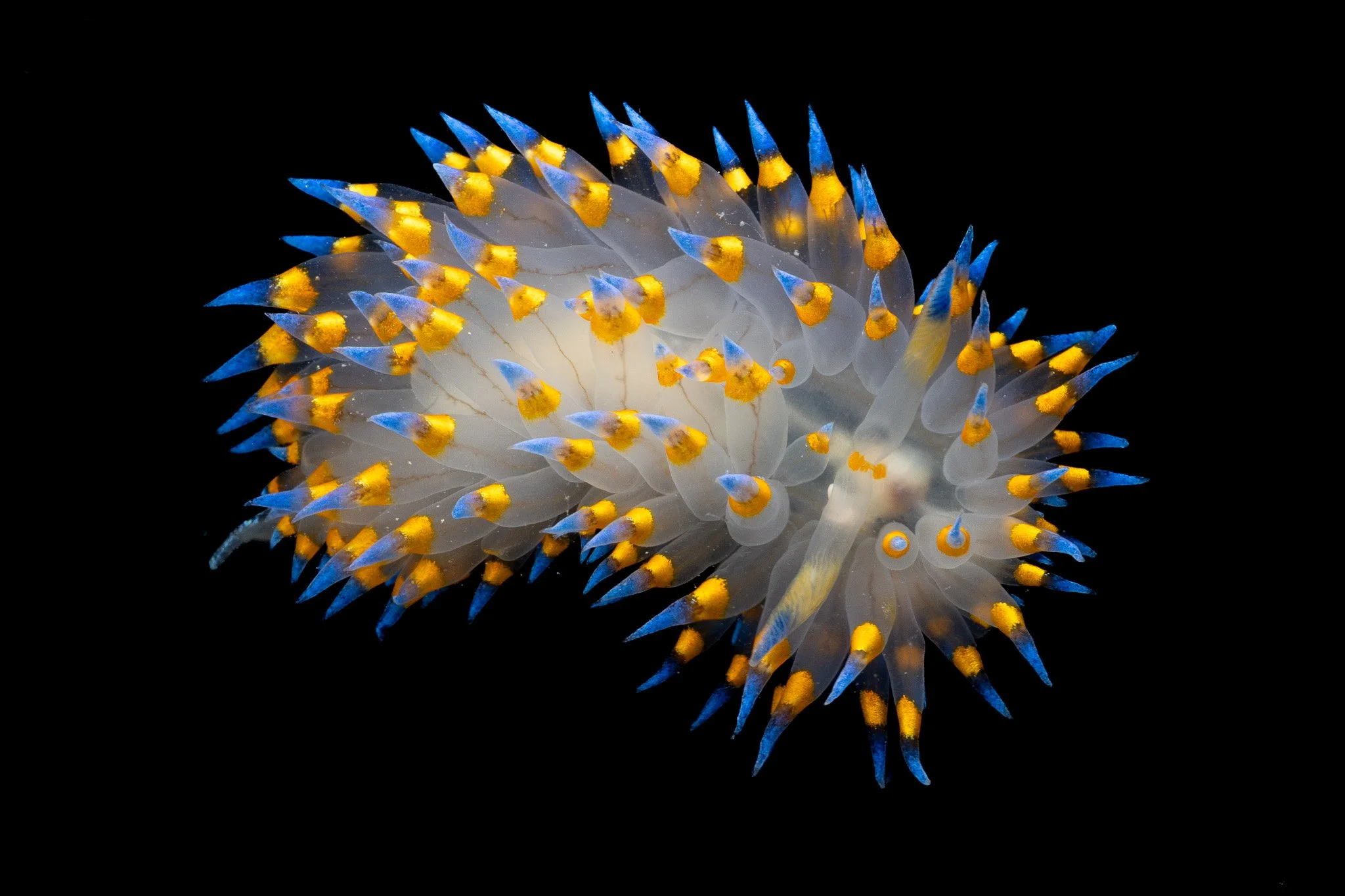
Cockscomb Nudibranch (Antiopella barbarensis)
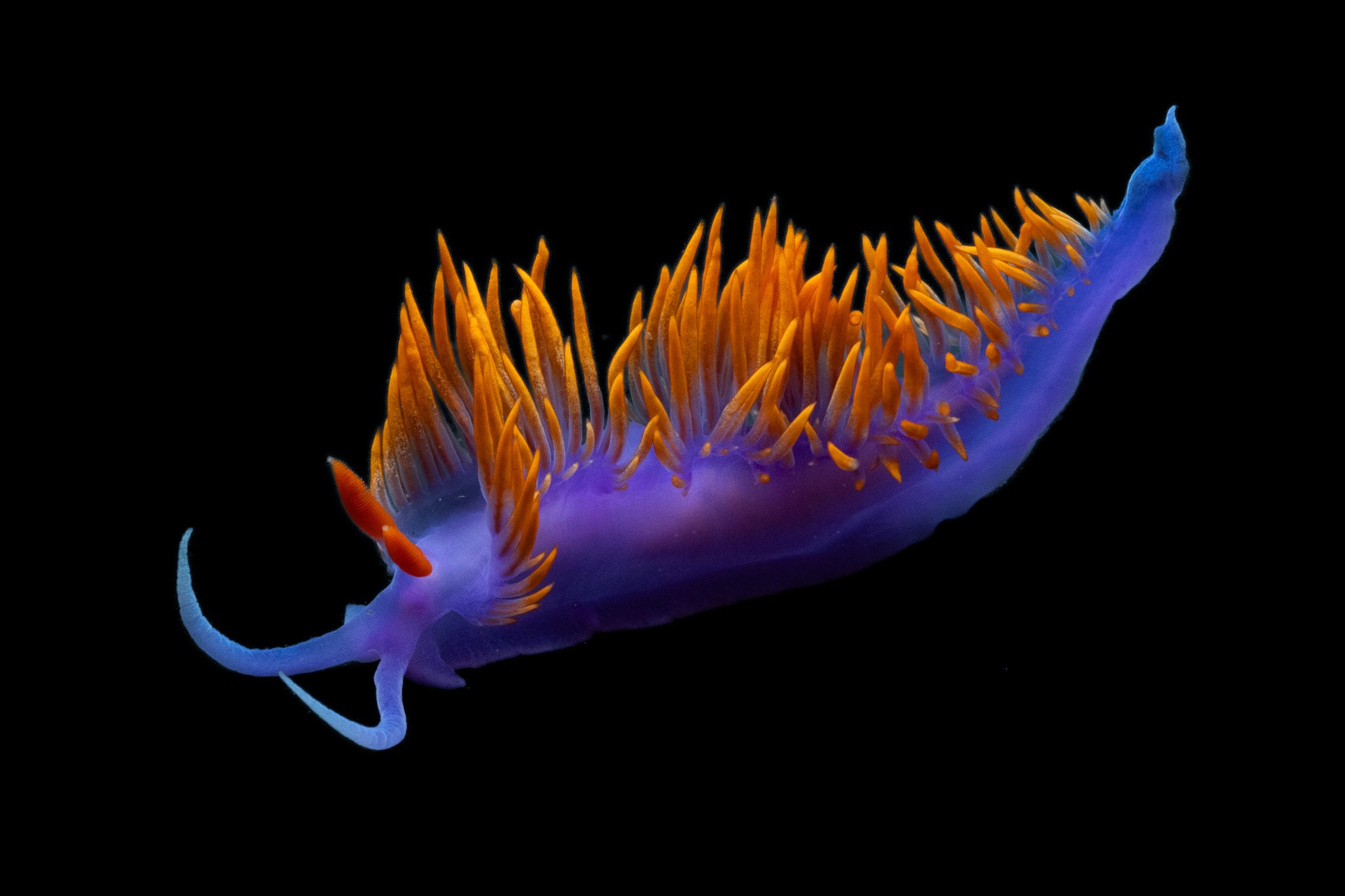
Spanish Shawl (Flabellinopsis iodinea)
The most obvious change this year was the high abundance of Hopkin’s Rose nudibranchs (Ceratodoris rosacea). This species occurs occasionally in Humboldt during warmer months but is by no means common. Over the past few decades, their presence in Humboldt has gradually changed as waters warm, but this year’s El Niño made their populations explode. A similar pattern exists with Sorcerer’s Dorids (Polycera atra). Like Hopkin’s Rose, this species also shows up occasionally in Humboldt, but not to the extreme I have seen this year, as there have been thousands along local boat docks (unheard of this far north, except for El Niño years).
Also on the docks, a new record for a very striking slug species showed up. Cockscomb nudibranchs (Antiopella barbarensis) hadn’t been reported north of the San Francisco Bay until 2026. I was able to photograph this species, providing a record of its presence and a new indication of its range expanding northward. Additionally, perhaps the most striking sea slug species of all, the Spanish Shawl (Flabellinopsis iodinea) began to show up in large numbers at select tide pool sites near Trinidad (crazy…).
To see the full gallery for this project, click here.
A huge thank you and shoutout to my tide pooling buddy André Giraldi, who is working on a similar project. You can see his work here: https://www.instagram.com/kookamongus/