
A Short Narrative on
Grief, Conservation & Mental Health
Note: This story discusses suicide.
I hope that by sharing my story, I can draw awareness to the importance of mental health and its connection to the natural world. I also hope to contribute to removing the stigma surrounding suicide loss and grief.
Towards the end of the freshman year of my undergraduate degree, I received a phone call that my dad, halfway across the country, had died by suicide.
My dad had a tremendous impact on my decision to pursue wildlife photography. From a young age, he showed me the importance of observation and getting outside. He also bought me my first camera and is fully to blame for my obsession with this field.
My dad lived in Colorado, in the ever-expanding urban sprawl of Denver. He was always an outdoorsman, especially when it came to fishing. His interest in biology fueled his love of fishing. He discovered new populations of endemic, endangered trout throughout the Rockies. Growing up, he would take me with him to extremely remote, tiny mountain streams. While he fished, I ran around with a butterfly net, looking for bugs. I have very fond memories of spending hours watching butterflies gather around tiny pools on dirt roads. Perhaps this is the origin of my interest in macro subjects.
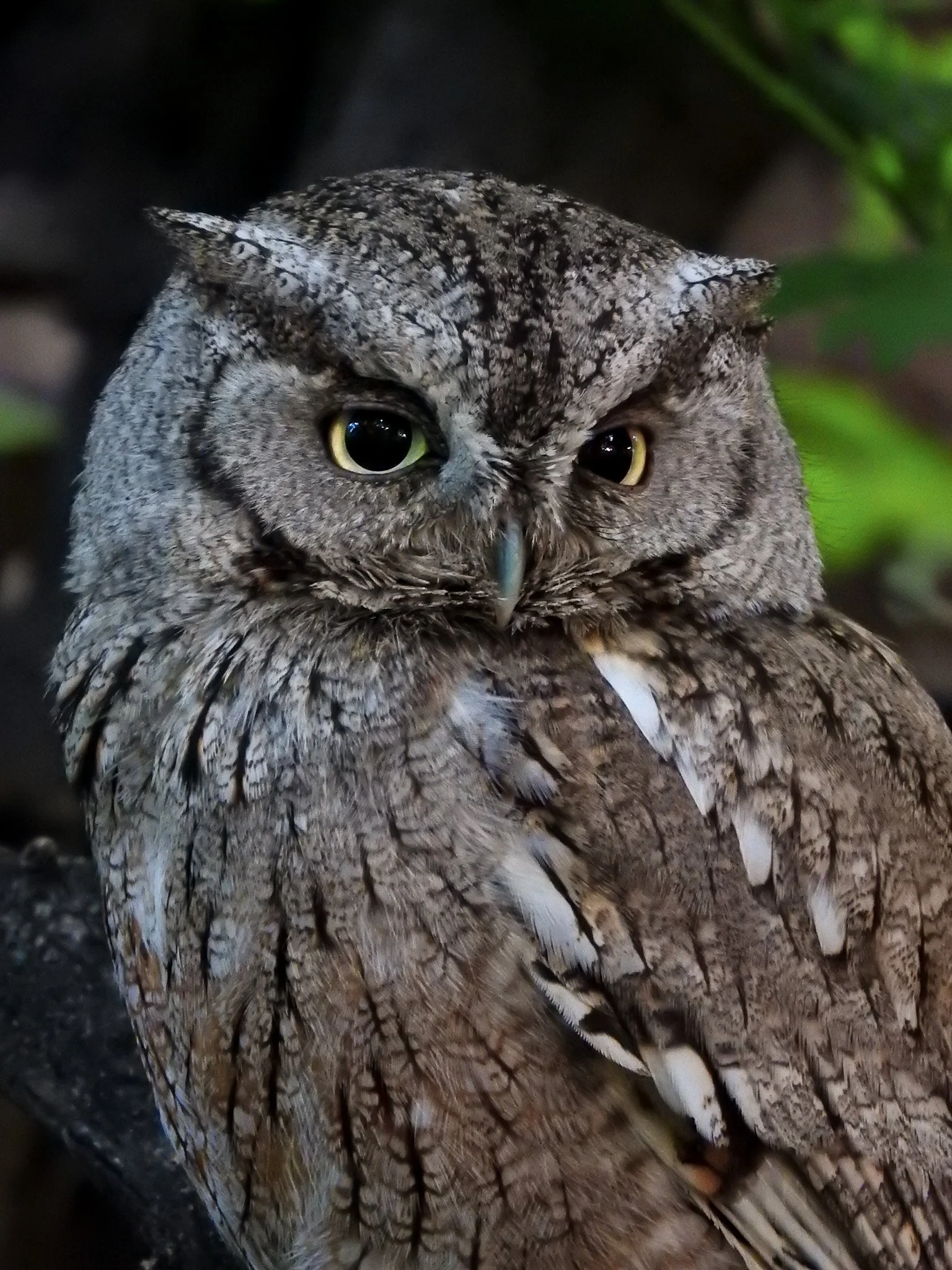
Around the time I started middle school, my dad started birdwatching. Many of his outings were within walking distance from home, along creek beds that ran through the suburbs and nearby golf courses. There was a surprisingly large population of great horned and Western screech owls, which fascinated him.
He began to know each individual owl, and would follow them year after year. He was there every step of the way: from their calls to find a mate to watching owlets leave the nest. One screech owl in particular (see image to the right) seemed to grow accustomed to his presence and was the subject of many experimental photo shoots during the early stages of my photography. I will never forget the mosquito-filled summer nights spent listening to the owls with my dad.
A few months after his passing, I returned to the old nesting sites for some of his favorite owls. It had been over a year since I had last visited. To my surprise, many of the old cottonwoods in the area had been cut down. I didn’t see any owls.
And so began my journey with grief: grieving my dad, his owls, and cutting ties with Colorado. My new home and community in Northern California felt like a safe space to begin processing everything. I was in one of the most beautiful natural areas in the country, which felt important. It was.
I took some time off from university and got really into tide pooling. I went all in on creating a comprehensive photographic portfolio documenting biodiversity in the intertidal zone. This project forced me to get out of the house on a schedule, as it was entirely tide-dependent. This structure provided an important framework on days when my grief felt heavy. It got me out of the house, into an entirely alien world.
Every time I went tide pooling, I saw something I had never seen before. Slowing down and taking a closer look at the intricacies of each tide pool became one of the few ways I could feel present, which was incredibly valuable given everything going on at the time. I began photographing and researching as many organisms as possible to learn more about this special ecosystem. The intertidal zone is just one of many ecosystems that helped me navigate my grief. Exploring biodiversity grounded me and was (and still is!) an incredibly important tool for staying on track. This new relationship I developed with the outdoors after my dad passed away completely changed my perspective on conservation.
Working to protect biodiversity works to protect lives. Humans depend on biodiversity not only for resources and natural cycles, but also for our well-being. In a time when so many people are struggling with mental health, protecting the things that create awe and fascination, no matter how small, is incredibly important. I thank my dad for showing me that.